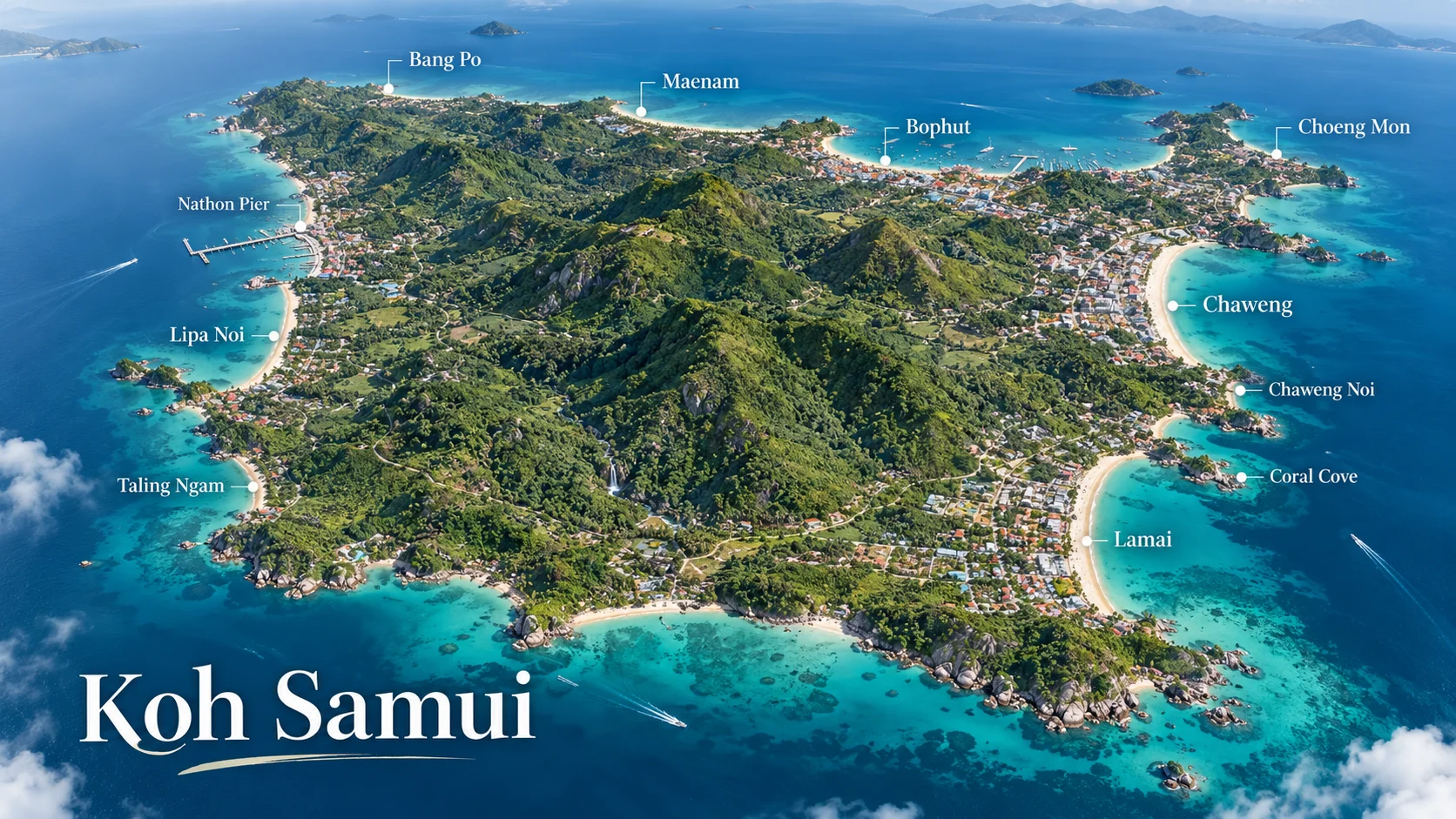
More than the beaches
Koh Samui is easy to enjoy from a beach chair, and many visitors never feel the need to leave their bay. That works — until you have a spare day and want a clearer picture of the island. Temples, a couple of well-known nature stops, an old fishing village, and the south-coast rocks sit close enough that you can combine several of them without turning the day into a race.
This guide is for that kind of day. It is not a ranked list, and it is not a promise that every stop will look the same in every season. It is a practical way to choose among the places that keep coming up when people ask what is worth leaving the hotel for — and how those places fit together depending on where you are staying.
You do not need to see everything below in one outing. Two or three stops is usually enough. Travel time changes with traffic, rain, and how long you linger, so treat the combinations as logic, not a fixed timetable.
Big Buddha (Wat Phra Yai)
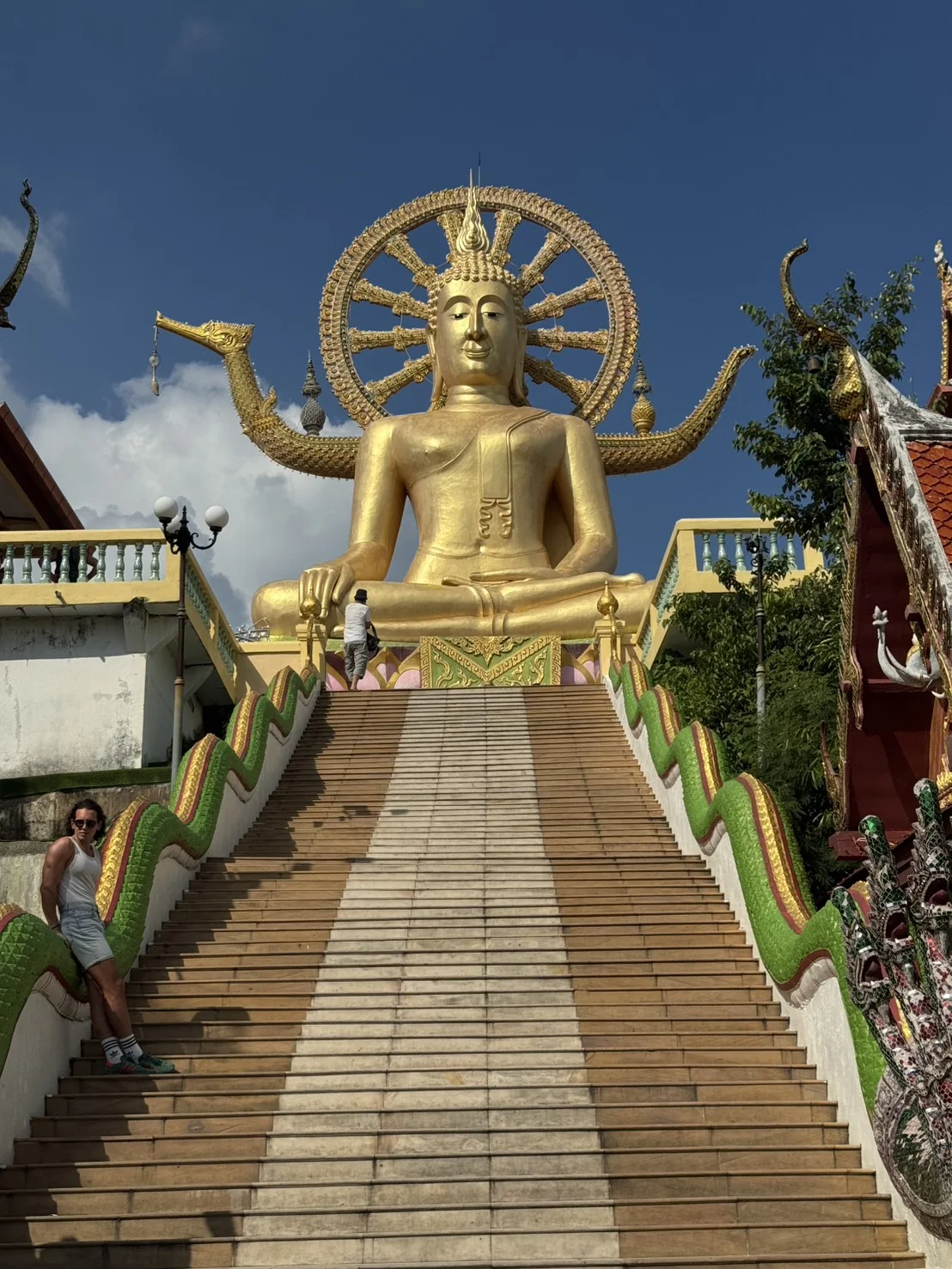
Wat Phra Yai, known to most visitors as Big Buddha, is one of Koh Samui’s most recognizable landmarks. The large seated Buddha sits above a temple complex on the island’s northeastern side, looking out over the water. People come for photographs, but the visit is better if you treat it as a temple first.
The approach is part of the experience: you move from the road up into a working religious site, with shrines, bells, and the usual mix of local worshippers and travelers. Give yourself time to walk the grounds rather than stopping only at the statue. The surrounding area is open and breezy, and the views across the nearby coast are part of why the site became a landmark.
Dress as you would at any Thai temple. Shoulders and knees covered is the simple rule. Hats come off in shrine buildings, voices stay low, and it is worth watching where people are praying before you step in for a photo. If you are traveling with children, this is an easy cultural stop as long as everyone is prepared for sun, stairs, and a modest dress code.
Big Buddha is often busier in the middle of the day. Early morning or later afternoon is usually more comfortable, both for heat and for a calmer walk. There may be small local shops and food stalls nearby; treat those as optional, not as part of a required circuit.
Wat Plai Laem
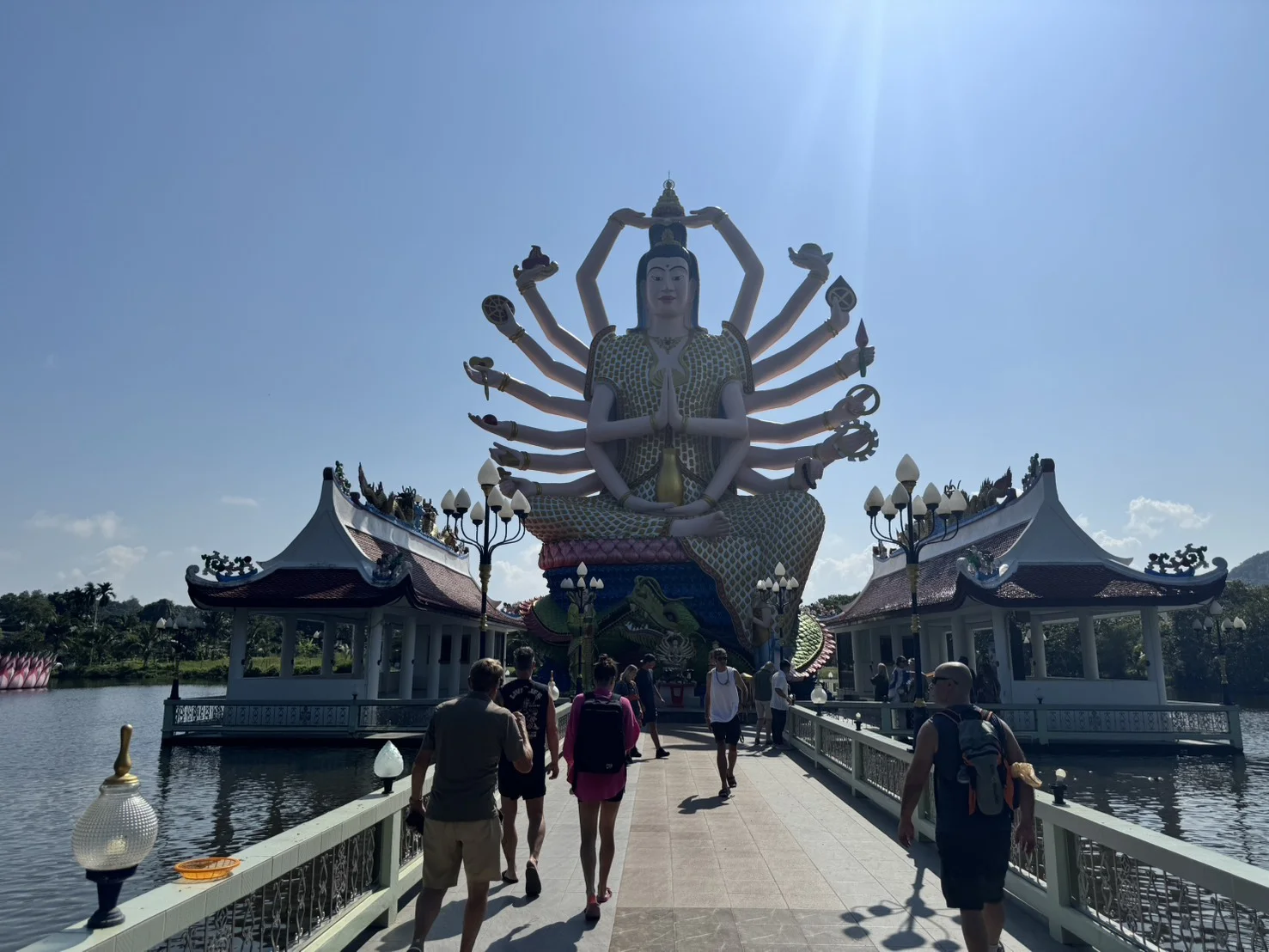
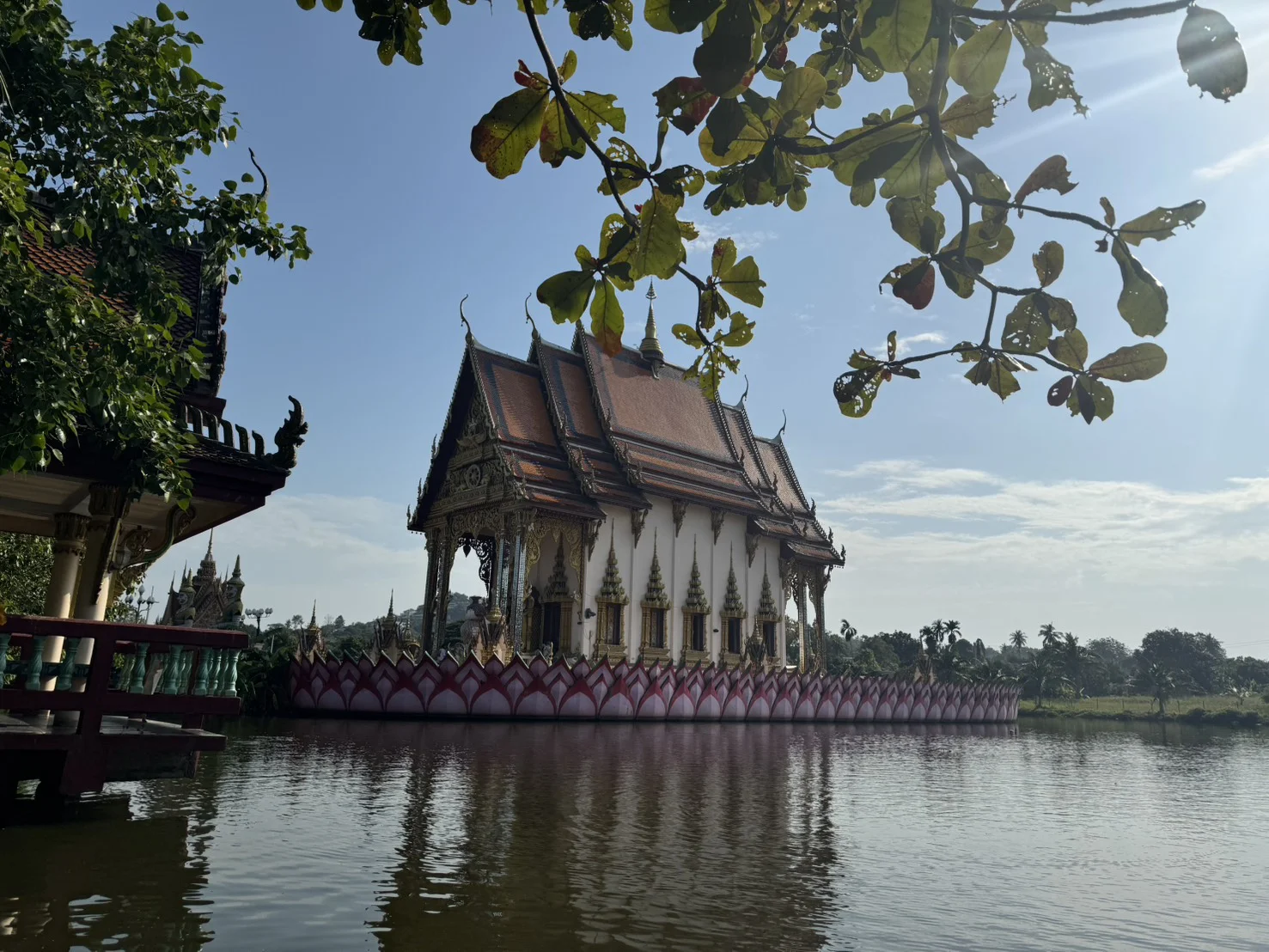
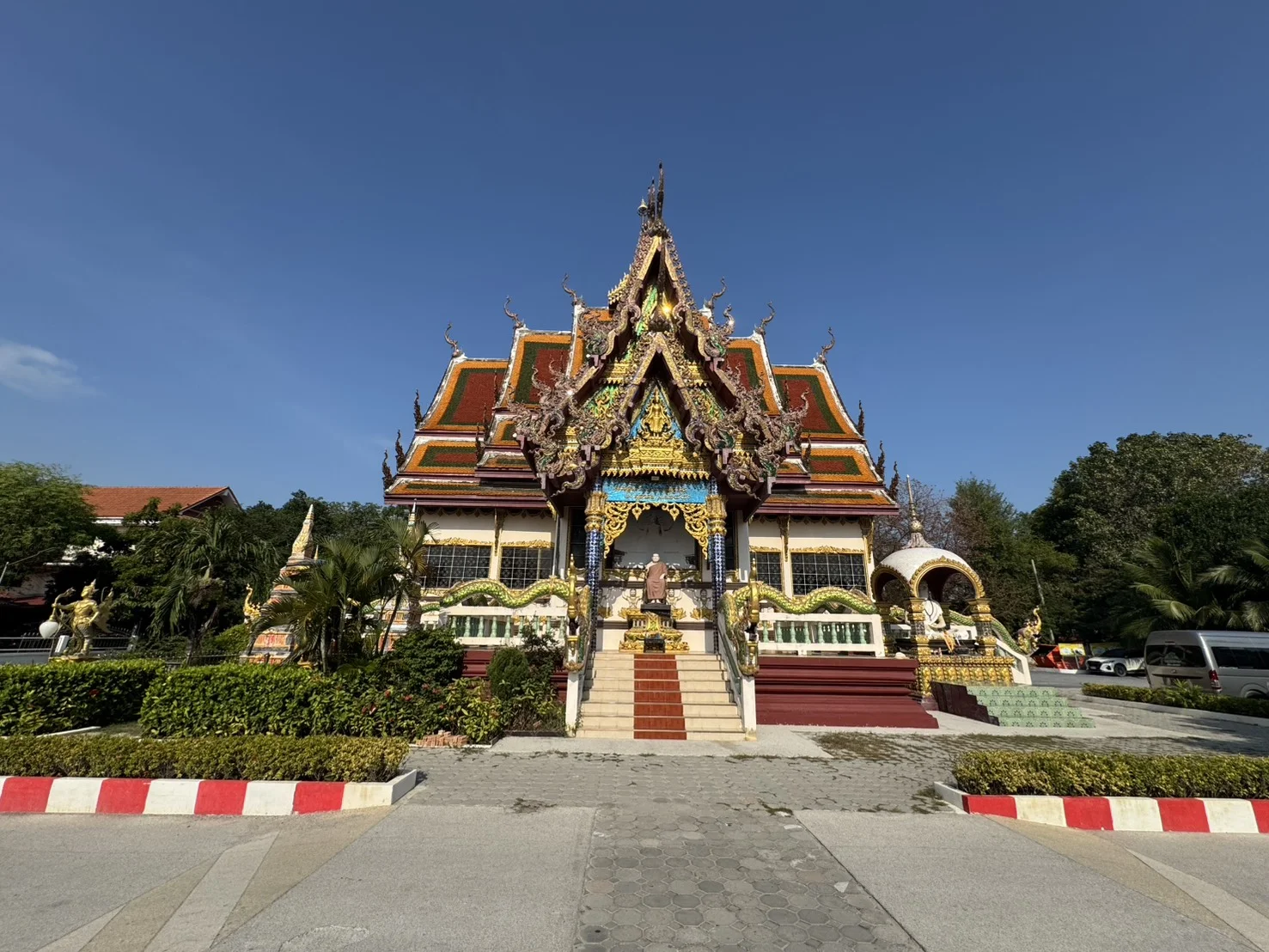
Wat Plai Laem sits in the same northeastern corner of the island, close enough to Big Buddha that the two are a natural pair. The temple is known for its large Guanyin statue and for the way the buildings sit around a lake. The architecture has a Chinese-Thai character that feels distinct from the more familiar southern Thai temple style many visitors expect.
This is still a religious site, not a theme-park set. You will see people making merit, lighting incense, and walking the edges of the water. The lake and the statues make it photogenic, but the better reason to stop is the atmosphere: it is one of the island’s clearer examples of how Chinese and Thai Buddhist traditions sit side by side on Samui.
Because the two temples are neighbors, most travelers visit them on the same loop. Doing Big Buddha and Wat Plai Laem together saves a second trip across the island and leaves the rest of the day free for a nature stop or an evening in Bophut. If you only have a half day and you are staying on the north or northeast coast, this pair is the cleanest use of your time.
The same temple etiquette applies. Comfortable walking shoes help if you want to circle the grounds. There is little shade in places, so a hat and water are more useful than a packed schedule.
Na Muang Waterfall
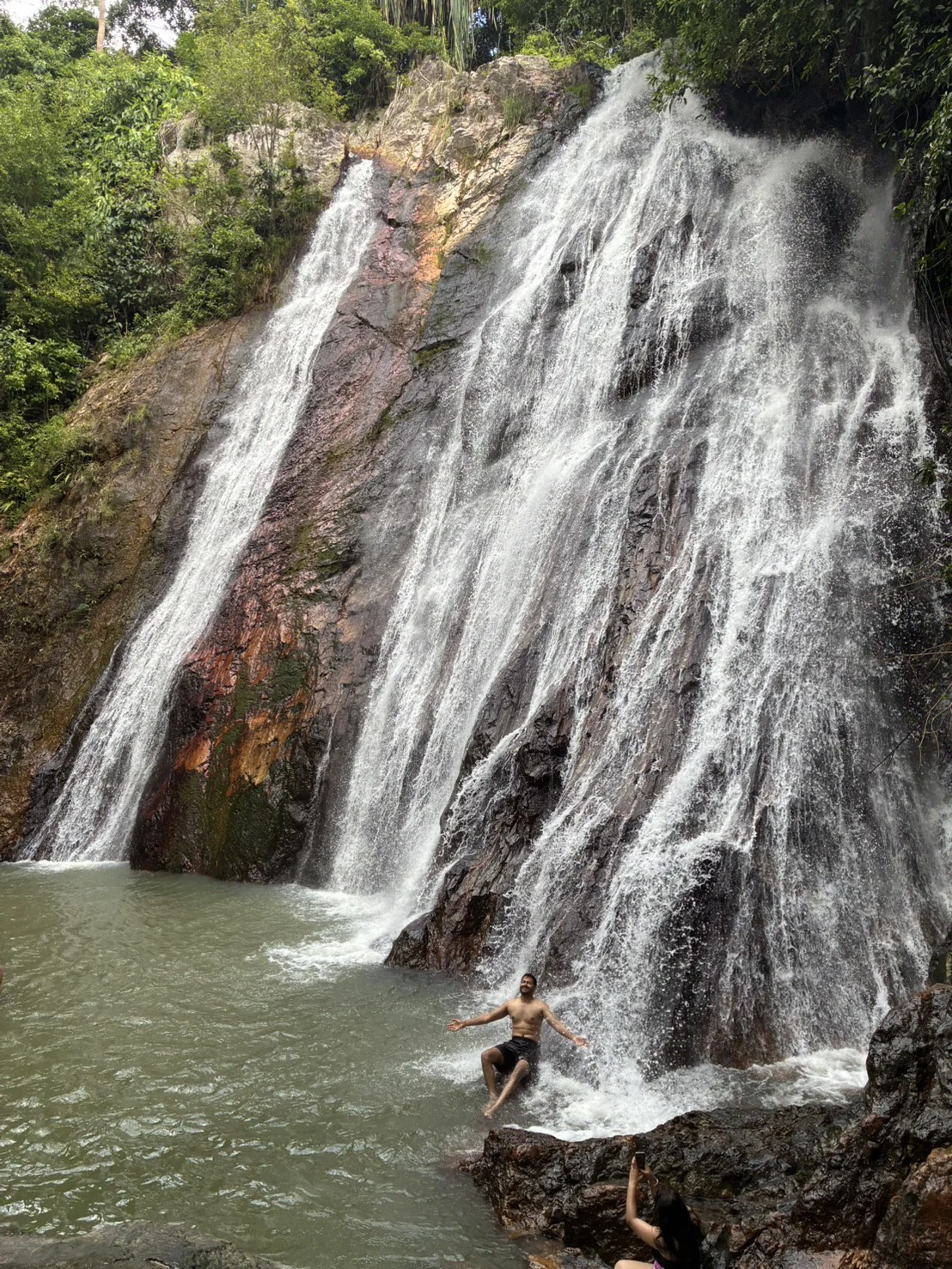
If you want a break from beaches and temples, Na Muang is the inland stop most visitors hear about first. The falls sit away from the coast, in greener, hillier country, and they offer a different pace: shade, the sound of water, and uneven ground instead of sand.
How much water you see depends on recent rain. After a wet spell the falls can be fuller and louder. In drier weeks the flow may be thinner. That is normal, and it is the reason this guide does not describe a single condition as typical. Check the weather for your dates, and be ready for the site to feel different from photographs taken in another season.
Surfaces around the falls are often wet, rocky, or both. Shoes with grip are more useful than flip-flops. If you go closer to the water, watch your step and keep an eye on children. This is not a difficult outing, but it is not a paved promenade either.
Na Muang is commonly paired with south-coast sightseeing because it sits inland of that side of the island. If you are already heading toward Hin Ta and Hin Yai, it is a logical nature stop on the same loop. If you are staying in the north and only have a short window, it may be more driving than the visit is worth that day — save it for a day when you are already moving south.
There is more than one waterfall area associated with the Na Muang name. Access, walking distance, and how far you can go can change with conditions and local management. Ask on the day rather than planning around a specific trail or swimming spot you saw online.
Fisherman’s Village, Bophut
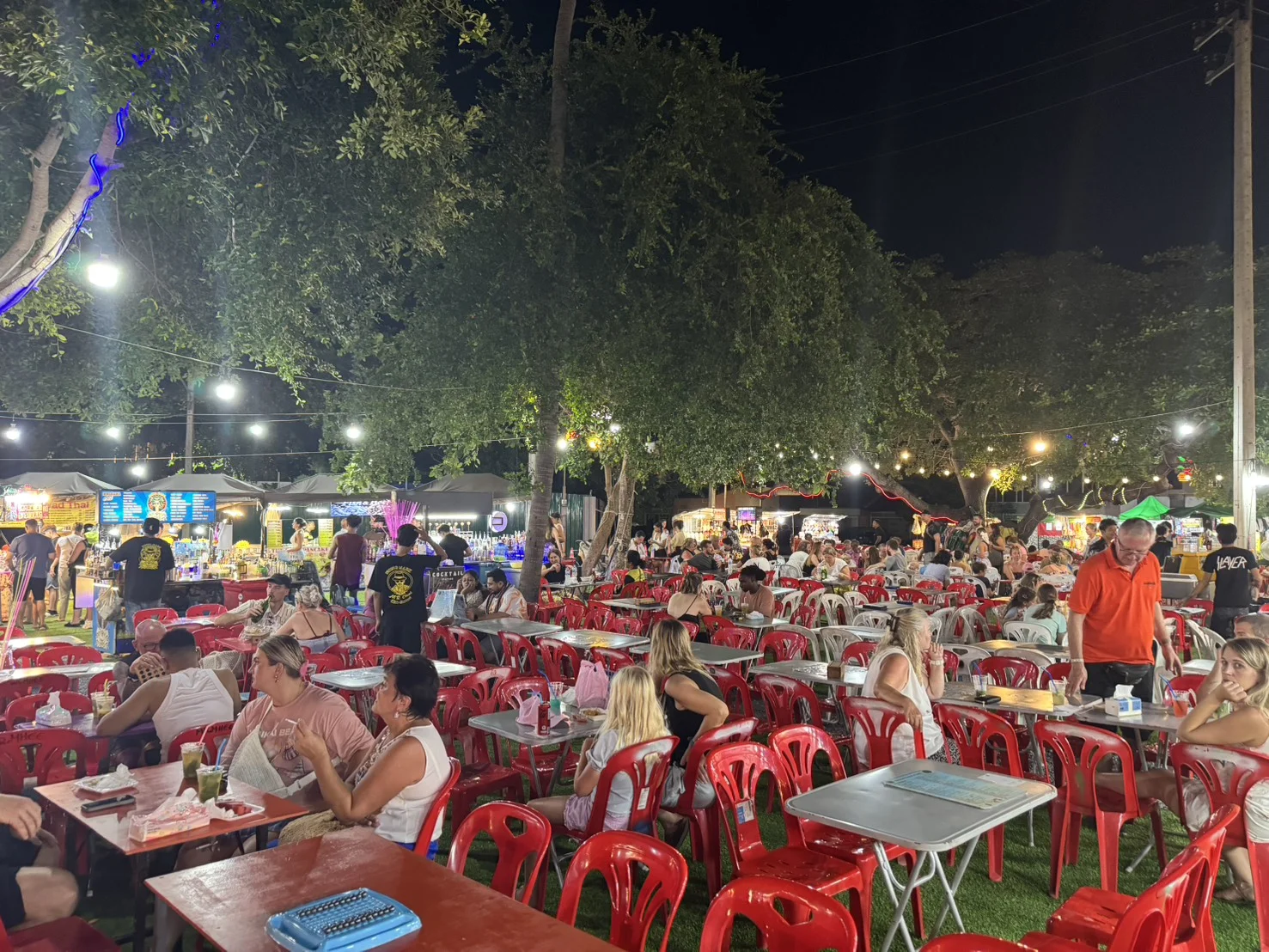
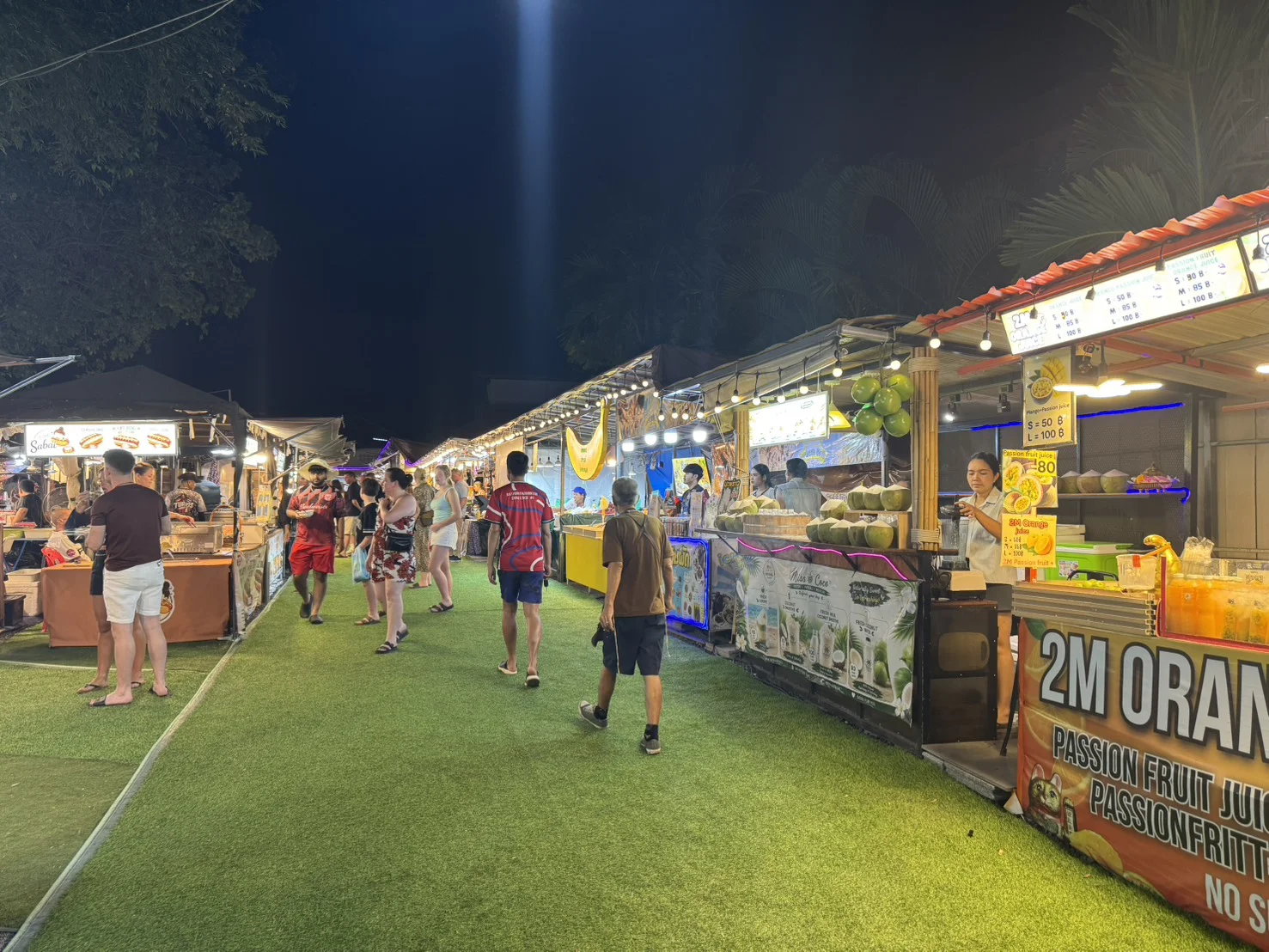
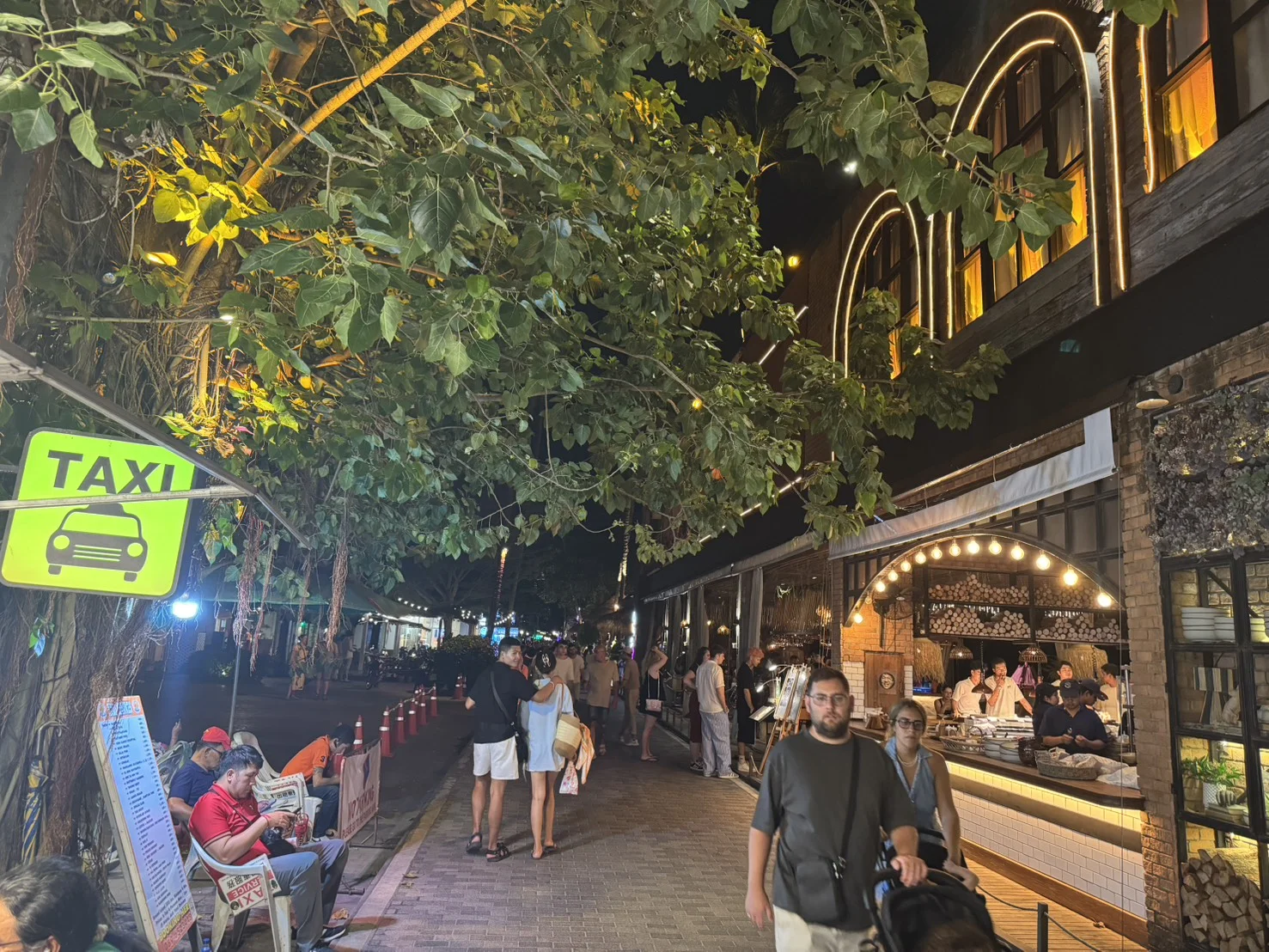
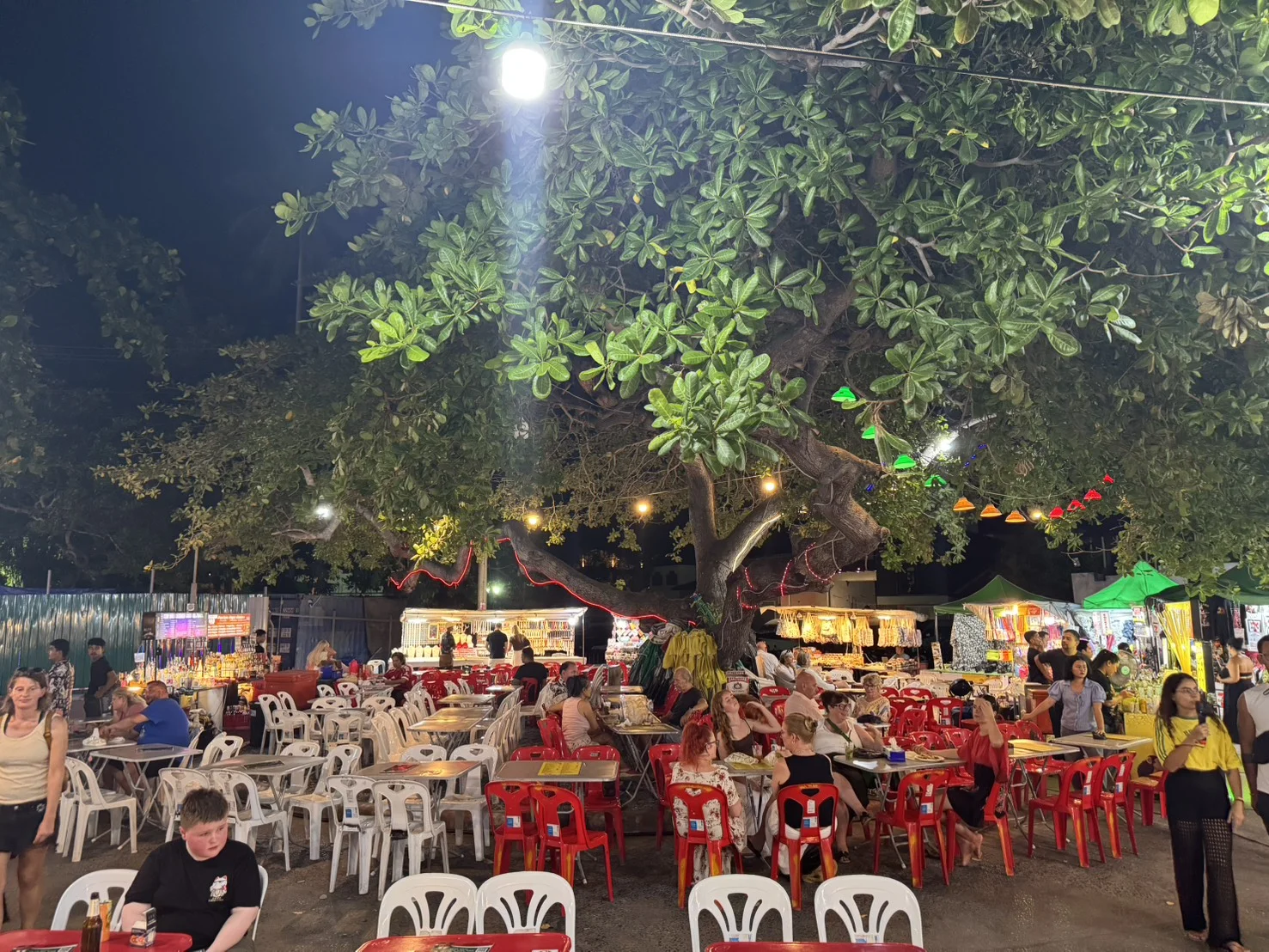
Fisherman’s Village in Bophut is the opposite of a waterfall morning. It is a compact old-town stretch of wooden buildings, small streets, and a working mix of restaurants, shops, and local life along the north coast. You come here to walk, eat, and stay out in the evening, not to tick off a monument.
Daytime can be quiet and pleasant if you want a slower look at the buildings. Evening is generally the more useful time. Lights come on, tables fill, and the village feels like a place people are actually using. On some evenings there is walking-street or night-market activity. The exact night and scale can change, so treat that as something to confirm locally rather than as a fixed weekly appointment.
This is an easy last stop after a day of temples or south-island sightseeing, especially if you are staying on the north coast or can get a ride back without rushing. It also works as a standalone evening if you have already done a beach day and simply want a village atmosphere.
You do not need a plan beyond a walk and a meal. Wear something comfortable for a warm evening. Small shops and food stalls may prefer cash. If you are traveling with family, it is a straightforward, low-intensity end to the day.
Hin Ta and Hin Yai
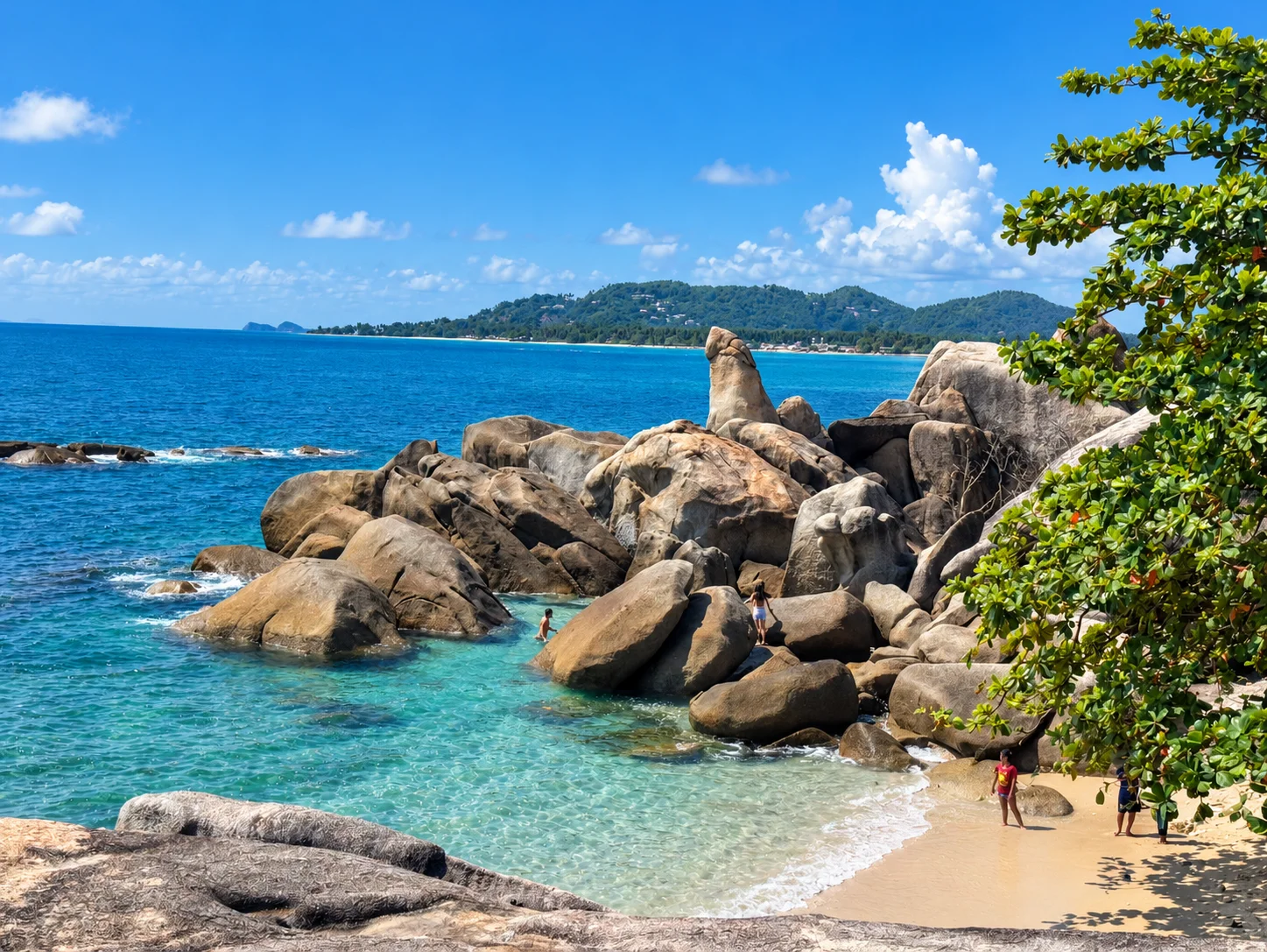
On the south coast near Lamai, Hin Ta and Hin Yai — the Grandfather and Grandmother Rocks — are weathered granite formations on the shore. They are well known because the shapes, seen from the right angle, resemble the figures in their names. Local folklore tells of an old couple whose journey ended at sea, and whose story became attached to the rocks. You do not need a crude version of the joke to understand why people stop here.
Visit it as a coastal viewpoint. The rocks, the shoreline, and the open water are the point. It is a short stop for most travelers, and it works well as part of a south-island loop rather than as a half-day destination on its own. Keep the visit tasteful if you are with children: the formations are natural, the folklore is old, and a brief look is enough.
The area can be hot and exposed. Footwear that can handle rock and sand is more comfortable than dress shoes. As with other outdoor stops, tide and weather change how close you can get and how busy the viewpoint feels. There is no need to climb on the formations or treat them as a playground.
ATV, zipline, and soft adventure
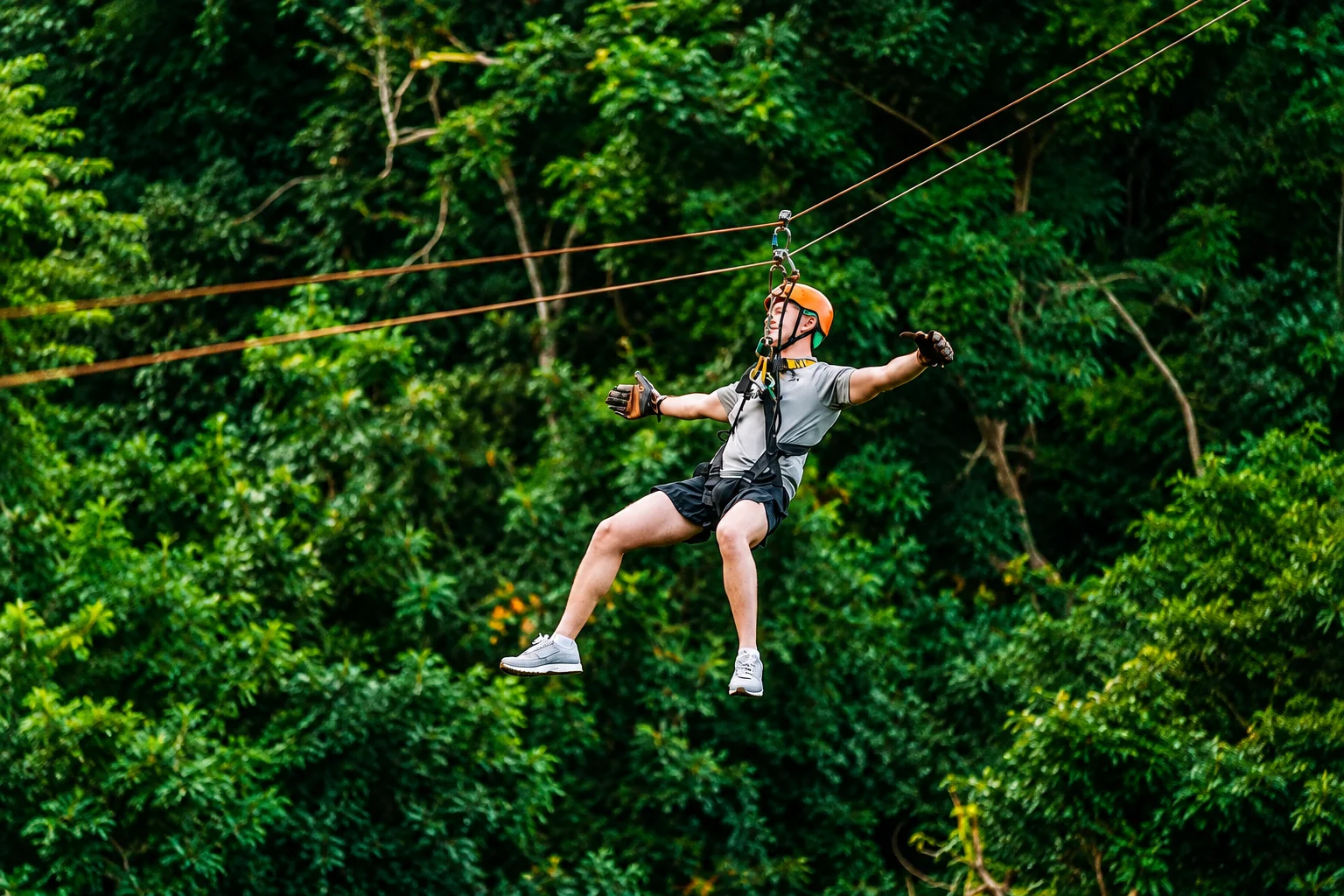
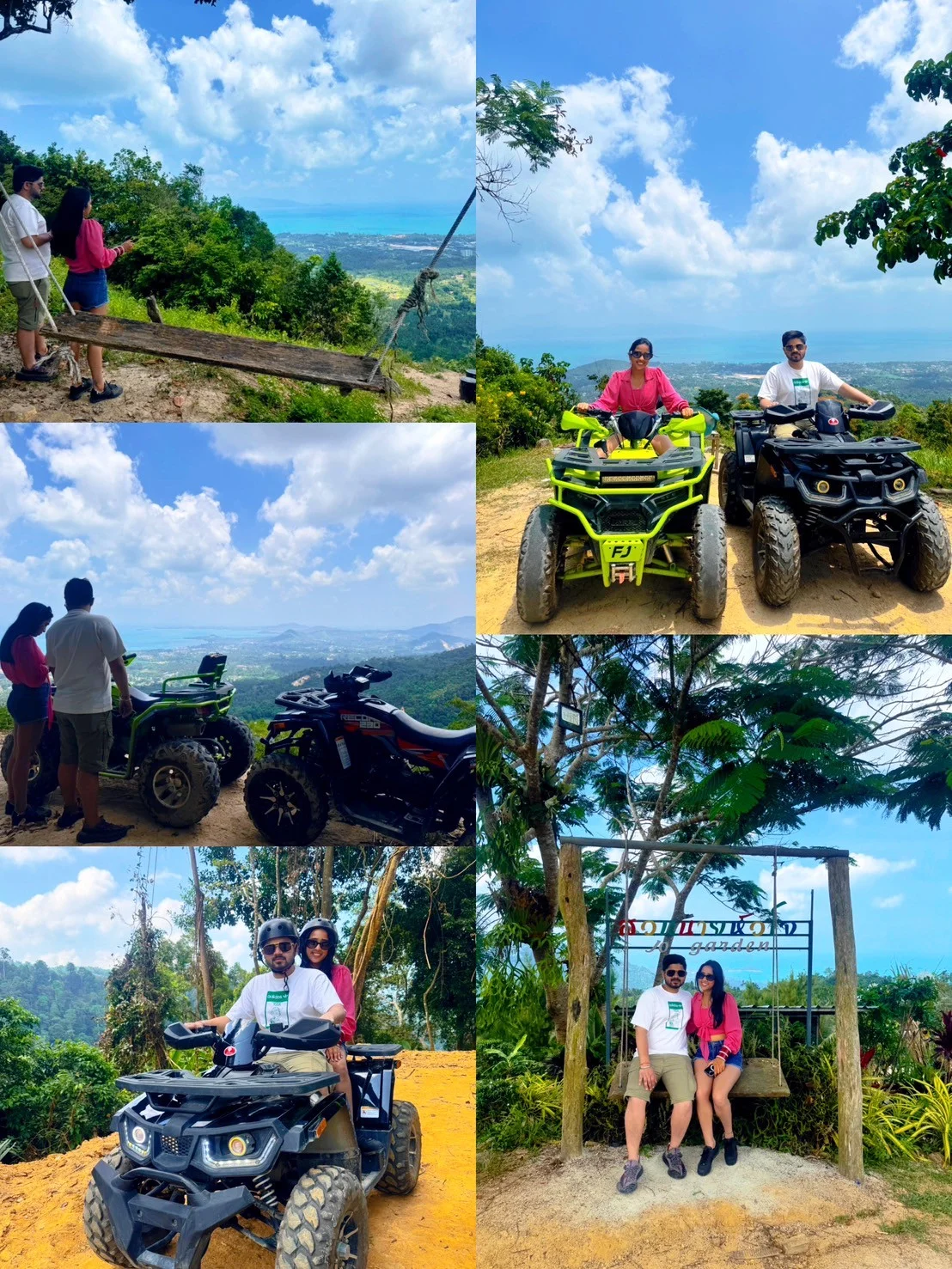
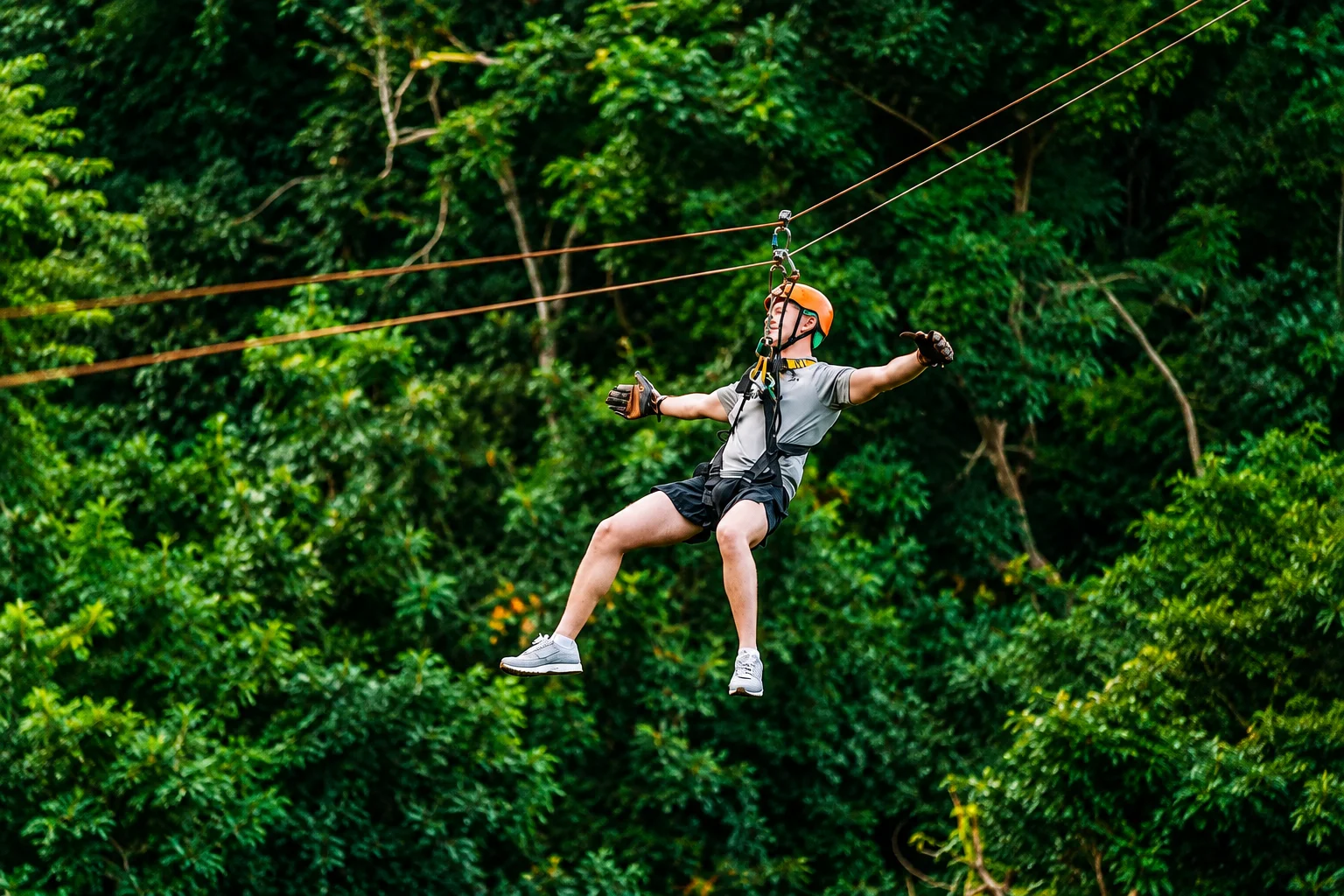
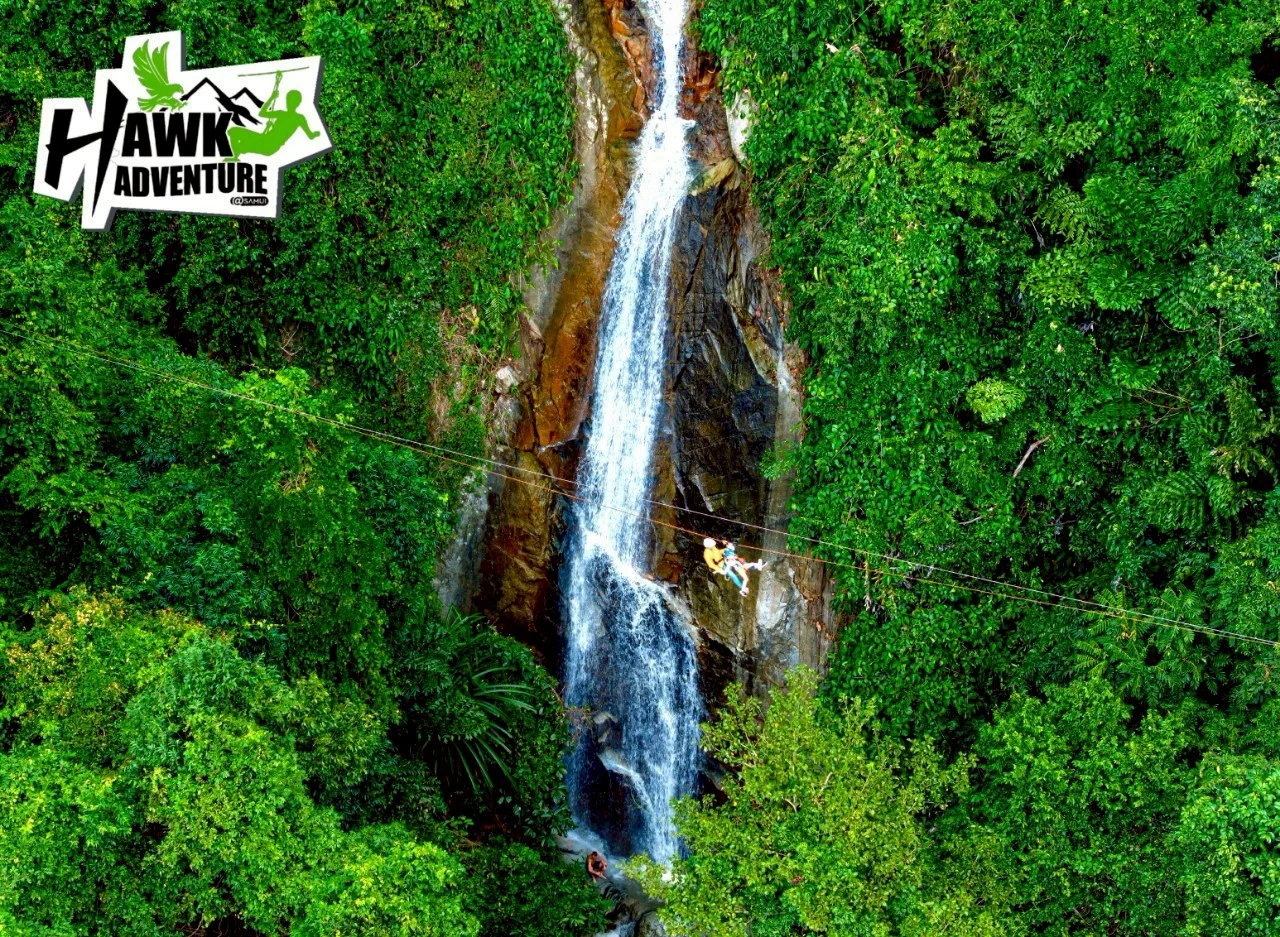
If you would rather move than look, Koh Samui also has soft-adventure outings: ATV rides through inland tracks, zipline courses in the hills, and similar half-day activities. This is an optional extra, not a required part of seeing the island.
Operators, routes, age and weight limits, and weather rules vary. Some days a course is open; some days rain or maintenance closes it. Do not assume that a van used for ordinary island sightseeing can reach every steep or 4WD-only track. Adventure locations sometimes need a suitable vehicle and a different kind of plan.
If you want that kind of day, treat it as a substitute for some of the sightseeing above, not as something to squeeze between four temple stops. SamuiToday can help you compare current tour options when you are ready. Check the specific operator’s restrictions before you book.
How to plan the day
A useful day on Samui is usually built by area, not by a long ranked list.
If you are staying in the north or northeast — Choeng Mon, Bophut, Maenam, and nearby — start with Big Buddha and Wat Plai Laem. They sit close together, they share the same kind of visit, and you can be done before the heat peaks. Keep the evening for Fisherman’s Village.
If you are already on the south or southeast side, or you have a full day and a driver, Na Muang and Hin Ta / Hin Yai sit more naturally on the same loop. That combination is more about inland green space and coastal rock than about temples. You can still finish in Bophut if you want an evening walk, but you will be crossing a larger part of the island to get there.
Travelers who want activity more than sightseeing can drop one of those loops and use the time for ATV or zipline instead. Trying to do temples, a waterfall, the rocks, an adventure course, and a village evening in a single day usually means you see car parks, not places.
Travel time is the variable you cannot lock in advance. The ring road is straightforward, but traffic around Chaweng, roadwork, and rain all stretch a journey that looks short on a map. Build slack between stops, and decide in the morning how many places you actually care about.
Getting around Koh Samui
A private vehicle with a driver is the most flexible way to combine stops that are not next to each other. You can change the order, wait out a shower, and avoid walking back to a main road in the heat. An ordinary private van used for island sightseeing is meant for normal roads and standard viewpoints — not for steep or 4WD-only mountain tracks. Those are a different kind of trip.
Taxis and ride arrangements work well for point-to-point transfers: hotel to Big Buddha, or a drop at Fisherman’s Village in the evening. They are less convenient if you want three inland stops with waiting time at each one.
Scooters are common on Samui. They are also a frequent source of holiday injuries. If you are not used to local traffic, hills, and sudden rain, a driver is the calmer choice.
For adventure meeting points in the hills, confirm how you will get there. Some locations are fine in a normal car; some are not. Do not assume the same vehicle that does a temple loop can also do a 4WD safari route.
Practical tips
Temple visits are simpler if you pack a light cover-up that can go over shorts or a sleeveless shirt. That one layer solves most dress-code moments.
Sun is the default. Rain is the interruption. A hat, water, and a light layer you can use either as sun protection or as a rain shell will cover most days. Outdoor stops have limited shade.
Wear shoes you can walk in on wet rock, temple terraces, and village streets. Save the flip-flops for the beach.
Cash is still useful for small local expenses — a drink, a parking or donation box, a market snack. Cards are common in restaurants, but not everywhere.
If you are heading to a waterfall or an adventure course, check the day’s weather before you lock the plan. A heavy morning storm is a reason to switch to temples or the village, not a reason to push on.
Do not overpack the day. Two or three stops, a meal, and an evening walk is a full Samui day. The island is not large, but it is not a compact old city either. Leaving slack is what makes the day feel like a visit instead of a transfer.
Choosing what fits your trip
If you want culture and a sense of place, start with Big Buddha and Wat Plai Laem. If you want nature, give Na Muang a morning when the weather supports it. If you want local evening atmosphere, Fisherman’s Village is the straightforward choice. Hin Ta and Hin Yai add a short coastal stop to a south-island day. Adventure is there if you want movement more than monuments.
SamuiToday is here when you want help turning that choice into a ride or a tour. The useful first step is still the same: pick the kind of day you actually want, then leave enough time to do it without rushing.